Bio
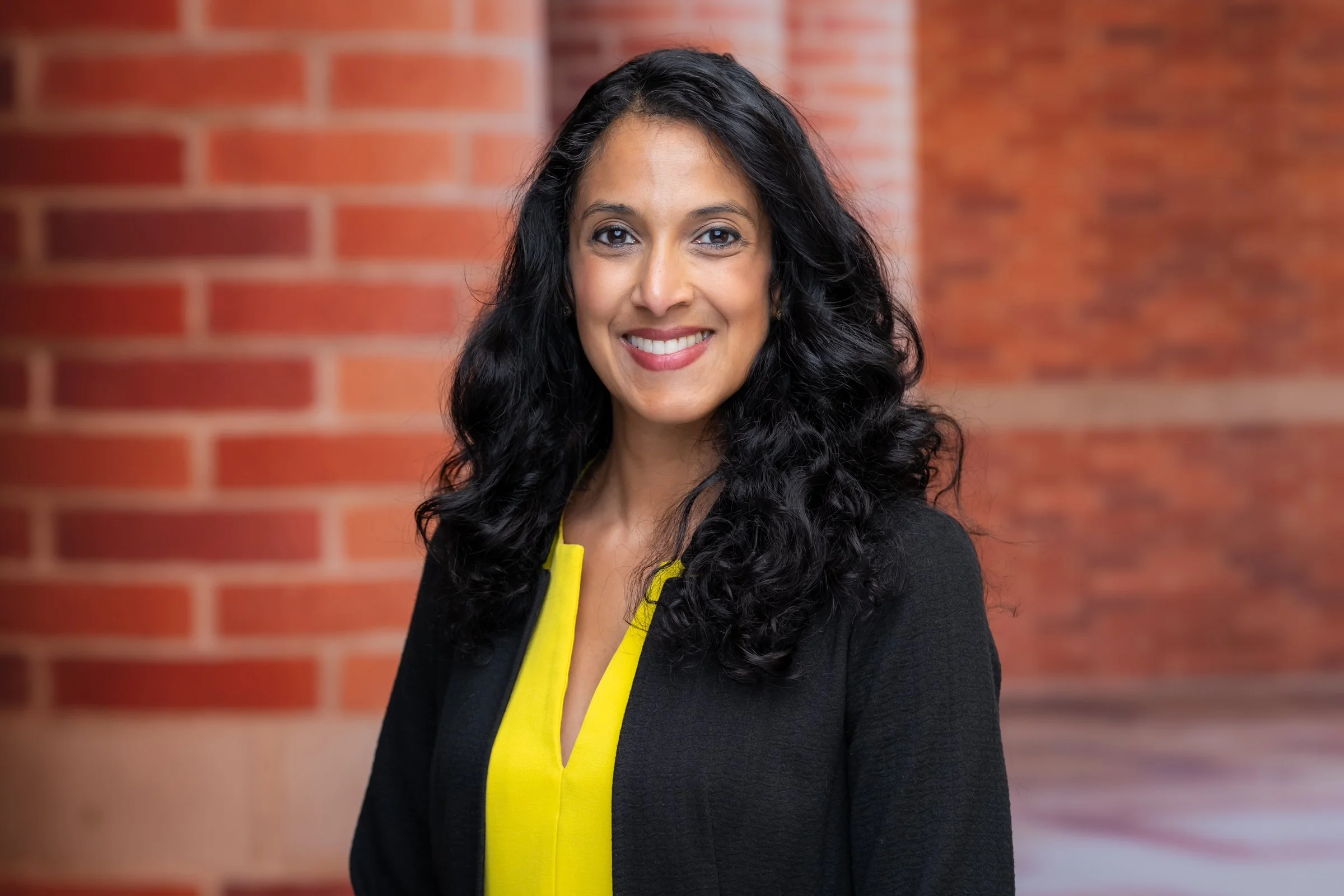
Nisha Viswanathan, MD, FACP, is Director of the UCLA Long COVID Program and an Extensivist at UCLA Health. She founded the program in 2020 by convening UCLA physicians around a condition that had no name yet; it is now the largest of its kind in Southern California, and its early work has guided patient care nationally. An Assistant Professor at the David Geffen School of Medicine, she teaches medical students and residents, develops curriculum on social determinants of health, and advocates for patients with complex chronic illness. She is completing her MBA at UCLA Anderson.
Every health system in the world was built around the episode — a visit, a procedure, a discharge. And every one of them is now filling with people whose illness doesn't work that way. Patients with chronic, multi-system illnesses, spanning years and specialties and institutions. Nobody designed a health system for these patients. I've spent my career with them.
I trace it to a hospital in India serving more than a million people, mostly impoverished. I was a college student, and I watched a system absorb a volume of human need it had no capacity to organize. The question it left me with is the one I still work on: what happens to the people a system isn't built to hold?
I've answered it from both ends of the resource spectrum, practicing in rural Arkansas, where the nearest specialist was often a day's drive, and a major academic medical center in Los Angeles. The pattern doesn't change with the budget. Medically complex patients accumulate specialists without acquiring a plan. They are handed between services, each doing its part correctly, and the individual’s needs as a person get lost.
At UCLA I practice as an Extensivist — the clinician who holds the whole picture for patients whose conditions do not fit inside any one specialty and whose complexity drives them to the hospital frequently. I also direct the UCLA Long COVID Program, which I built in 2020 by convening physicians around a condition that had no name, no billing code, and most notably, no pathway of care. This condition handed me thousands of patients who were medically complex, poorly served, and invisible to every existing care model at once. What I’ve learned in all my work is the issue is not the disease, its about the architecture of the system built around it.
That architecture is my subject. I work on chronic care management, team-based care design, value-based payment, and the reforms that make continuity economically survivable rather than heroic. I teach at the David Geffen School of Medicine, advocate for complex-care patients in legislative settings, and am completing an MBA at UCLA Anderson.
Let’s Connect
Complete the brief form to start a discussion where we can cover objectives, timelines, and the solutions that will demonstrate immediate value for your team or organization.